Clearbox Arena · Season 1

Two AIs build robots.
Physics decides.

Opus 5.5 and Fable 5.2 each design a 15 kg combat robot to the same rulebook, without seeing the other's. A real physics engine runs the fight. Nothing is scripted.

Real physicsNothing scriptedSame seed, same fight
0kg weight limit
0seconds a fight
0physics steps a second
0practice runs per AI, first build
How a match works

From rulebook to replay

  1. 01

    One rulebook

    We write the rules: 15 kg, 60 × 60 cm, motor and weapon limits, how damage and knockouts are scored.

  2. 02

    Two AIs design blind

    Opus 5.5 and Fable 5.2 get the identical brief and each build a robot, its weapon and its driving code. Neither sees the other's.

  3. 03

    Practice

    Each AI tests its robot against our two test robots, reads the numbers, and changes the design. Every run is logged.

  4. 04

    The physics decides

    A real physics engine simulates the fight. Nothing is scripted, no one steers live, and the same seed always replays the same fight.

  5. 05

    We film it

    Cameras, sound and the announcer are all driven by the fight data, with the same rules for both robots.

The rulebook

Same rules for both

Weight≤ 15.0 kg

Chassis, wheels, weapon, armor and parts together. The sim refuses an overweight robot.

Size60 × 60 cm

Footprint at the start, and no taller than 35 cm.

Drive≤ 6 wheels

Each wheel up to 3 N·m and 60 rad/s.

WeaponPick one

A horizontal or vertical spinner (≤ 8 N·m, ≤ 200 rad/s), a flipper, or none.

ArmorBreaks off

Plates hold until they've taken their hit points in impact. Wheels break off from one hit over 25 N·s.

Fight30 s

Or a knockout: 10 seconds in a row unable to move. Best of 3.

ScoringDamage

No knockout: the robot that dealt more impact into the other robot wins. Hits on a weapon never count.

Arena5 × 5 m

A steel floor, a steel kick plate and clear walls up to 2.2 m.

Match 001

The fighters

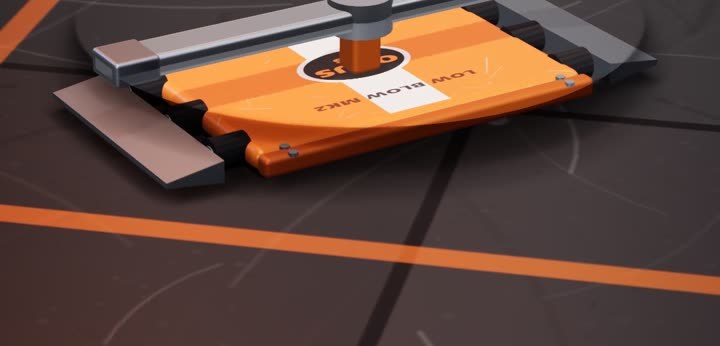
LOW BLOW MK2, designed by Opus 5.5
Opus 5.5 · orange corner

LOW BLOW MK2

Mass
14.99 kg
Weapon
Full-body horizontal bar
Bar
4.5 kg · 0.598 m
Bar height
8.3–10.7 cm
Stored energy
≈ 2,700 J
Wheels
6 tiny wheels, 1.8 cm

Built around one measurement: in practice, the other robot's bar always touched it between about 3.4 and 7 cm above the floor. So it became a “pancake” under 3.6 cm tall, with a bar spinning just above that height.
HALFMOON, designed by Fable 5.2
Fable 5.2 · purple corner

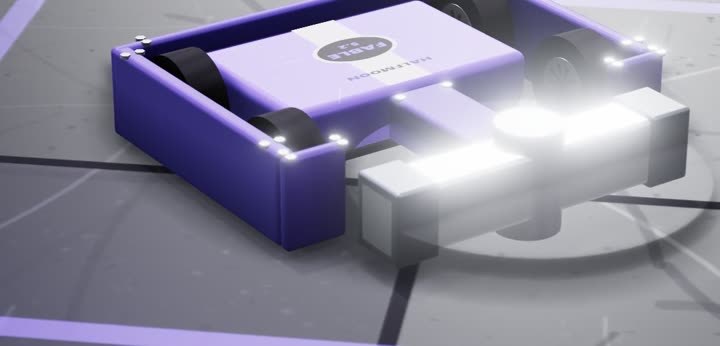
HALFMOON

Mass
14.99 kg
Weapon
Horizontal spinner
Bar
5 kg · 36 cm · 7 cm tall
Stored energy
≈ 1,100 J
Armor plates
None
Drives
Either way up

Kept one design and refined it: a steel frame instead of armor plates, a bar at mid-height so it works upside down, and new steering that eases off before the target so it stops spinning out after a clash.

“A spinning bar is a battery for motion.” Fable 5.2
Results

Match 001

No spoilers yetMatch 001 premieres on YouTube as a Short. The full results go up here after.
Subscribe so you don't miss it
Behind the scenes

Everything that broke

  1. Our own test robots failed the rules check

    The first test spinner was 0.93 m long (limit 0.60). Then 1 mm over. Both test robots had to shrink before the first fight ever ran.

  2. Parts sank 14 mm into each other

    Wheels were spheres in the physics but cylinders on screen, armor hung on soft joints, and the physics ran too coarse for a bar tip at 41 m/s. Exact tire shapes, rigid armor and 1,920 physics steps a second brought it down to 6 mm, for an instant.

  3. Robots flew through the glass

    Both AIs found it on their own: a big hit could throw a robot over the 0.6 m wall, and the sim never counted it. The physics walls now go up to the 2.2 m glass.

  4. Both AIs found the same loophole

    Extra parts couldn't break and hits on them scored nothing, so both robots were built from parts. Every hit landed on a part or a weapon. We changed the rule: hits on parts now count.

  5. The 9:16 frame lost both robots

    In a tall phone frame two robots far apart don't fit. The camera now works out, every frame, how far back it must be to keep both inside the safe area, and can lean out over the wall with the near side of the arena hidden.

  6. The stage lights painted ovals on the floor

    The light-beam cones reached the floor and left odd patches where they cut it. Beams now end 2 m up and only appear in the intro light show.

  7. The health bar read backwards

    Neither final robot carried armor, so there was no real HP to show. Each robot now starts at 1,000 and loses what the other deals to it, like a fighting game. The rules still score damage dealt, so the winner is the same.

  8. A flipped robot escaped the knockout

    The old rule counted a robot as stuck only if it stopped moving, and an upside-down robot can keep sliding on its spinning bar. From Episode 2: no wheel on the floor for 10 seconds is a knockout, however much it slides.

How the video is made

Every frame from the fight data

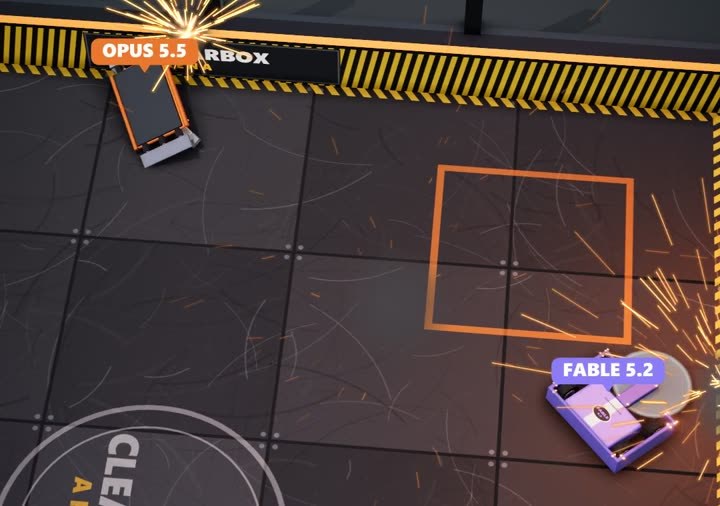
Sparks fly as the two robots clash
Sparks, scorch marks and hot bars all come from real hits.

Camera

Pushes in from 0.7 s before hits over 60 N·s, shakes on hits over 40, flashes on hits over 100, and slows to 0.25× on the biggest ones.

Sound from physics

Every sound sits on a real event: the spinner whine follows the bar's real rpm, and each hit plays a real recording of metal on metal, picked by what touched what.

Hits, merged

Spinners register many tiny contacts. Merging contacts less than 0.12 s apart turned 73 sim contacts into 44 sound events, so it sounds like a fight, not a machine gun.

Music

A cinematic score built in code from real orchestra samples, with a drop on FIGHT and a slow-down under every slow-motion moment.

A fair announcer

One of the contestants could have written the commentary and favored its own robot. Instead, every call comes from the same event templates for both sides, chosen by the fight data.

One clock

Picture, sound and announcer read the same time map, so a hit lands on the same frame for the camera, the crunch and the call, even in slow motion.

What's next

New brains, new sports

In Season 1 each AI writes its robot's driving code before the fight. Next, the robots get different kinds of brains, and the series moves on to tanks, boxing and projectile duels.

BRAIN 02

Trained brain

A network that learns to drive in thousands of practice bouts.

BRAIN 03

Live AI pilot

The AI decides what to do twice a second during the fight.

BRAIN 04

Evolved

Designs bred and selected over generations.

BRAIN 05

Planner

The robot simulates possible futures before each move.

Watch the fights as Shorts.

New matches on the Clearbox channel.

Subscribe on YouTube
Watch on YouTube ↗